Yes, you need an SSL certificate for a blog, even a small hobby blog with no shop and no logins. Without it, Chrome labels every page "Not secure", comment and contact forms travel in plain text, and you give up a small ranking signal Google has used since 2014. Most hosts now include a free certificate, so the switch usually costs nothing.
This article explains why HTTPS matters for blogs. If you already agree and want to pick a certificate type, go to how to choose an SSL certificate.
What is SSL, in plain words?
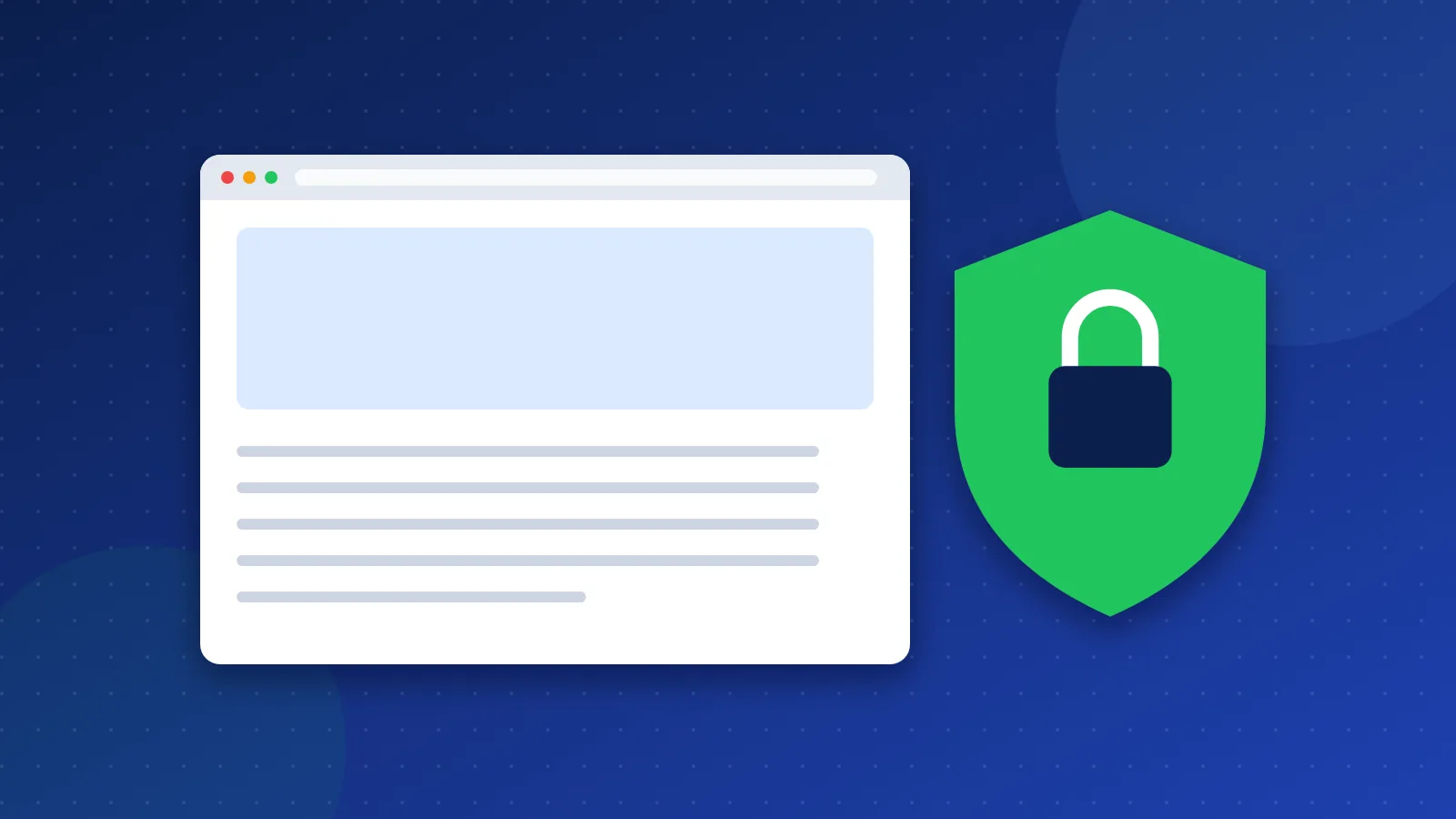
SSL (today really called TLS) encrypts the connection between a reader's browser and your server. When it is active, your address starts with https:// and the browser shows a padlock. The certificate is a small file that proves your server belongs to your domain.
Think of it as a sealed envelope instead of a postcard. With plain HTTP, anyone on the path, such as a public Wi-Fi owner or an internet provider, can read and even change what you send. With HTTPS, they only see that a visit happened, not what was on the page or in the form.
Why does a blog need HTTPS if it sells nothing?
Many bloggers think SSL is only for online stores. That idea is out of date. Here is what HTTPS does for a normal blog.
1. It removes the "Not secure" label
Since Chrome 68 in July 2018, Chrome marks every plain HTTP page as "Not secure" in the address bar. Other browsers show similar warnings. A first-time reader who sees that label next to your name has a reason to leave before reading a word. You worked hard on the post; do not let the address bar undo it.
2. It protects your forms
Blogs collect more data than people think: comment forms with names and email addresses, contact forms, newsletter sign-ups and your own admin login. Over HTTP, all of that travels as readable text. On shared Wi-Fi, someone could grab your WordPress password as you log in. HTTPS closes that gap for you and your readers.
3. It stops others from changing your pages
On an unencrypted connection, a network in the middle can inject ads, tracking code or even harmful links into your page. Your reader blames your blog, not the network. Encryption makes that kind of tampering very hard.
4. It enables modern browser features
Browsers limit many newer features to secure pages. Service workers (used for offline reading and push messages), HTTP/2 in practice, and access to things like location only work over HTTPS. Even if you do not use them today, your theme or plugins may.
Does HTTPS help a blog rank in Google?
A little. In August 2014, Google announced HTTPS as a ranking signal. In the same post, Google called it "a very lightweight signal", said it affected fewer than 1% of global queries, and said it carried less weight than signals such as high-quality content.
So be realistic. Adding SSL will not lift a thin post onto page one. It works more like a tie-breaker and a trust signal. The bigger SEO gain is indirect: readers who do not see a warning stay, read and maybe link to you. Good content and honest links, as explained in our guide to backlinks for SEO, still do the heavy lifting.
| Without HTTPS | With HTTPS |
|---|---|
| "Not secure" label in Chrome | Padlock, no warning |
| Form data readable on the network | Form data encrypted |
| Pages can be altered in transit | Tampering is very hard |
| No HTTPS ranking signal | Small, lightweight ranking signal |
How hard is it to add an SSL certificate for a blog?
Usually it takes a few minutes. Let's Encrypt, a nonprofit certificate authority, gives out free certificates, and most hosting control panels can request and renew one with a click. WordPress.com and Blogger also serve blogs over HTTPS by default.
- Turn on SSL in your hosting panel. Look for "SSL", "Let's Encrypt" or "Security" in cPanel, hPanel or Plesk.
- Change your site address to https:// in your CMS settings (in WordPress: Settings, then General).
- Redirect HTTP to HTTPS with a permanent 301 redirect. Our guide on how to create a 301 redirect in .htaccess shows the exact lines.
- Fix mixed content. Replace old http:// links to your own images and scripts, or the padlock may disappear.
- Update Search Console. Add the HTTPS version (or use a domain property) and submit your sitemap again.
Let's Encrypt certificates last 90 days, so check that automatic renewal is on. An expired certificate is worse than none: browsers show a full-page warning that most readers will not click past.
Common worries, answered
- "Will HTTPS slow my blog down?" The extra handshake is tiny on modern servers. HTTPS also lets browsers use HTTP/2, which often makes pages feel faster.
- "Will I lose rankings when I switch?" Not if every old URL redirects to its HTTPS twin with a 301. Google treats it like a small site move.
- "Do I need a paid certificate?" No. A free DV certificate encrypts the same way. Paid options add company checks and support, which a personal blog rarely needs.
The bottom line: an SSL certificate for a blog is no longer optional. It costs little or nothing, it keeps readers from bouncing off a warning, it protects every form on your site, and it adds a small plus in Google. Turn it on, redirect, check for mixed content, and then get back to writing.
Frequently asked questions
Is HTTPS a big ranking factor for blogs?
No. Google described it as a very lightweight signal that carries less weight than content quality. It can help as a tie-breaker, and it avoids the "Not secure" label that drives readers away. Content and links still matter far more.
Do I need SSL if my blog has no login or shop?
Yes. Comment forms, contact forms and your own admin login all send data. Chrome also marks every HTTP page as "Not secure" no matter what the page does. A free certificate fixes both problems.
What happens if my SSL certificate expires?
Browsers show a full-page security warning, and most visitors leave. Free certificates from Let's Encrypt last 90 days, so make sure your host renews them on its own. Check the expiry date now and then, especially after you change hosts.