Domain Authority (DA) is a score from 1 to 100, made by the SEO company Moz, that predicts how likely a website is to rank in search results compared with other sites. It is built mostly from the links pointing to a site, and Google does not use it. With domain authority explained for beginners in one line: use DA to compare yourself with the sites you compete against, and raise it the only way that lasts — by earning links from relevant, trusted websites.
What is Domain Authority, in plain words?
If you were around in the 2000s, you may remember Google's own PageRank score in the browser toolbar — my first website reached PageRank 5 back then. Google stopped showing that number publicly years ago, and DA is the closest thing most people use today.
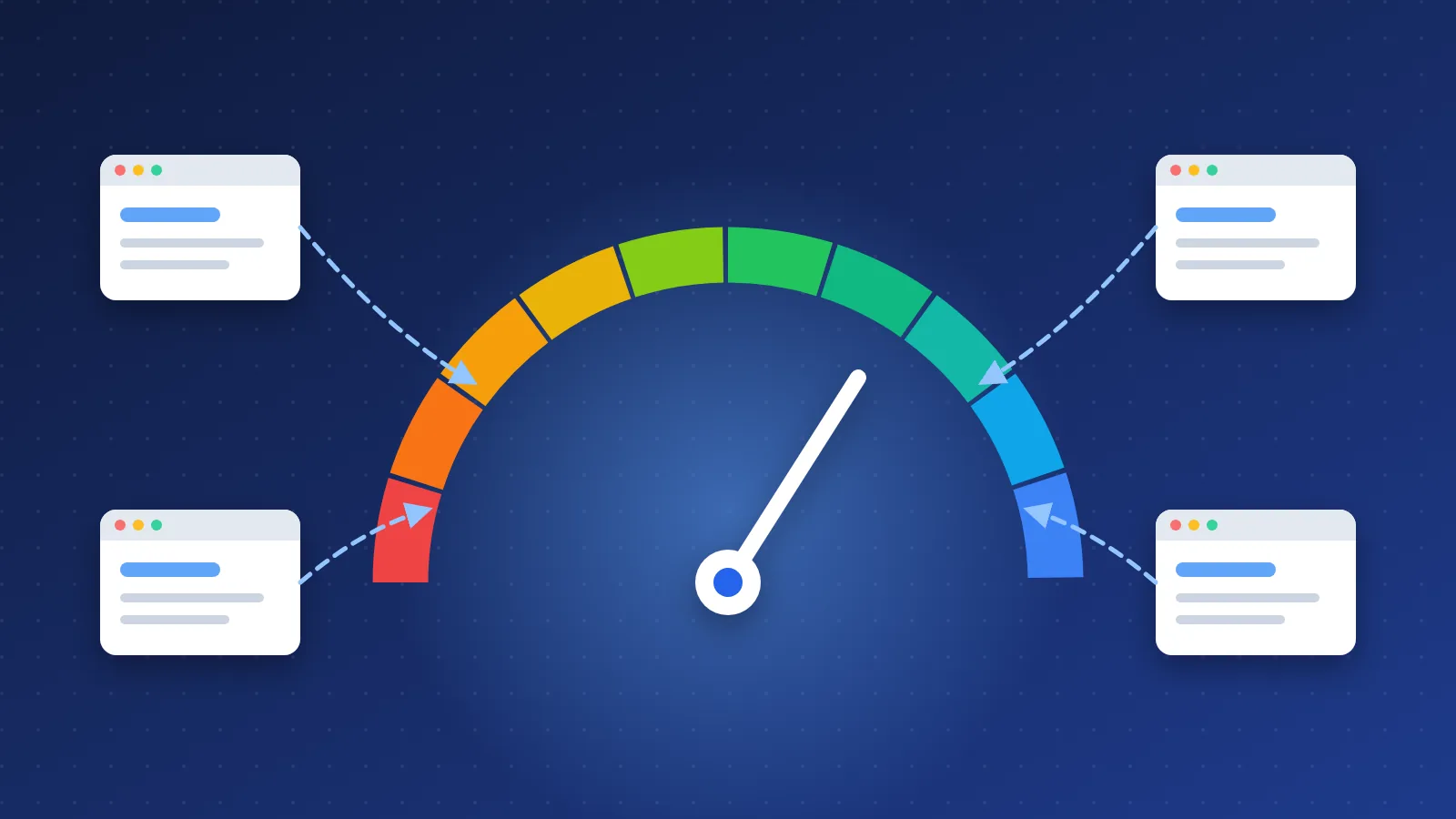
Think of DA as a weather forecast for rankings. A forecast is not the weather itself, but it gives you a fair idea of what to expect. In the same way, DA is not a ranking — it is Moz's best guess at how strong a website is, based on data Moz collects with its own web crawler.
A few terms you will meet on this page:
- Backlink — a link from another website to yours. If you are new to this, read what backlinks are and why they matter first.
- Linking root domain — a unique website that links to you. Ten links from one site count as one linking root domain.
- SERP — the search engine results page, the list you see after you search.
Moz describes DA as a score that "predicts how likely a website is to rank in search engine result pages." The important word is predicts. It is an outside estimate, not a number any search engine gives you.
Does Google use Domain Authority?
No. Google's John Mueller said it directly in 2020: "We don't use domain authority at all in our algorithms." Moz says the same on its own site — DA is not a Google ranking factor and has no effect on search results.
So why do so many people track it? Because the thing DA measures — links from other sites — is something Google does use. Google's own documentation says it uses links "as a signal when determining the relevancy of pages and to find new pages to crawl." DA is a handy shortcut to see how a site's link profile stacks up. It is the thermometer, not the fever.
How is DA calculated?
Moz has not published its full formula, but the main inputs are well known:
- How many different websites link to you (linking root domains) — this matters far more than the raw number of links.
- How strong those linking websites are — one link from a respected site outweighs dozens from unknown ones.
- Total link count and other link signals, combined by a machine-learning model that Moz trains against real search results.
Two things surprise most beginners. First, the scale gets harder as you climb: in practice, moving from DA 10 to 20 is much easier than moving from 50 to 60. Second, DA is relative. If the biggest sites on the web gain a lot of links, your score can dip slightly even though nothing changed on your side.
Other SEO tools have their own version of the same idea:
| Metric | Tool | Scale | Mainly based on |
|---|---|---|---|
| Domain Authority (DA) | Moz | 1–100 | Linking domains, link counts, machine-learning model |
| Domain Rating (DR) | Ahrefs | 0–100 | Strength of a site's backlink profile |
| Authority Score | Semrush | 0–100 | Backlinks plus estimated organic traffic |
The numbers from different tools do not match, because each tool crawls the web differently. Pick one and stick with it, so you compare like with like.
What is a good DA score?
There is no universal "good" number. A good DA is one that is close to the sites already ranking for the searches you want. These rough ranges are typical — treat them as a guide, not a rule:
- Brand-new site: usually 1–10. Completely normal.
- Small blog or local business with some links: often somewhere in the 10–30 range.
- Well-known niche site: commonly 30–60.
- Big brands, news sites, universities: 70 and up.
For perspective: one of my own sites reached Moz DA 60 after Google stopped showing PageRank, built largely on the directory and forum links of that era — many of which I would not build today. A high score from old-style links did not make every page rank or even get indexed.
To find your own target, search for a keyword you care about, check the DA of the top five results, and treat their range as your benchmark. A site with DA 25 can easily outrank a DA 60 site for a specific long-tail search if its page answers the question better.
Domain authority explained for beginners: 6 ways to raise it
Every method that works long-term comes back to the same thing: give other sites a reason to link to you. Here is the order I recommend for a new website.
- Publish one or two pages worth linking to. A clear guide, a checklist, a free tool or a list people keep coming back to. Pages that save someone time earn links on their own.
- Get listed where your audience already looks. Reputable, human-edited directories and local listings give a new site its first trusted links. Start with a checked list of free directories and, for a physical business, local business directories.
- Turn mentions into links. Search for your brand name. If a site mentions you without linking, a short, polite email often fixes that.
- Fix what you already have. Broken pages waste links that other sites gave you. Find and fix broken links, and redirect old URLs to their new homes.
- Write for other sites in your niche. A useful guest article on a relevant blog brings a link and readers. Choose sites your audience reads, not sites that only sell "guest post" slots.
- Link your own pages together. Internal links do not raise DA directly, but they spread the strength you earn to the pages that need it.
What should you avoid?
Some shortcuts push DA up for a while and then backfire with Google, which is the search engine that actually matters:
- Buying links. Google's spam policies list "buying or selling links for ranking purposes" as link spam. Paid links must carry
rel="sponsored"orrel="nofollow". - Link exchanges at scale. "Link to me and I'll link to you" in bulk is also named in Google's policies.
- Automated link building. Tools that create hundreds of links for you produce exactly the kind of links Google ignores or penalizes.
- Selling "DA boosts". Services that promise DA 50 in a month usually build links on sites made only for that purpose. The score may rise; your rankings rarely do.
Common beginner mistakes with DA
- Checking it every day. Moz updates its data on its own schedule. Check once a month at most.
- Judging link partners only by DA. A DA 20 site in your exact niche is often a better link than a DA 70 site that has nothing to do with your topic.
- Panicking over a small drop. Because DA is relative, a dip of one or two points usually means the rest of the web moved, not that you did anything wrong.
With domain authority explained for beginners, the takeaway is simple: DA is a useful yardstick for comparing your site with competitors, not a goal in itself. Earn links from relevant sites, keep your pages helpful and your site healthy, and the number will follow along with the rankings that actually bring visitors.
Frequently asked questions
Can I improve my Domain Authority quickly?
Not in a way that lasts. DA rises as more trusted websites link to you, and that takes months, not days. Services that promise fast DA jumps usually rely on paid or automated links that Google's spam policies forbid.
Is a low Domain Authority bad for SEO?
No. Google does not use DA, so a low score cannot hurt you by itself. It only tells you that your site has fewer strong links than the sites you are comparing it with, which matters most for very competitive searches.
Where can I check my Domain Authority for free?
Moz offers a free Link Explorer and a free browser extension that show DA, with a limited number of checks. Ahrefs has a free Website Authority Checker that shows its own Domain Rating instead. Use the same tool every time so your numbers stay comparable.