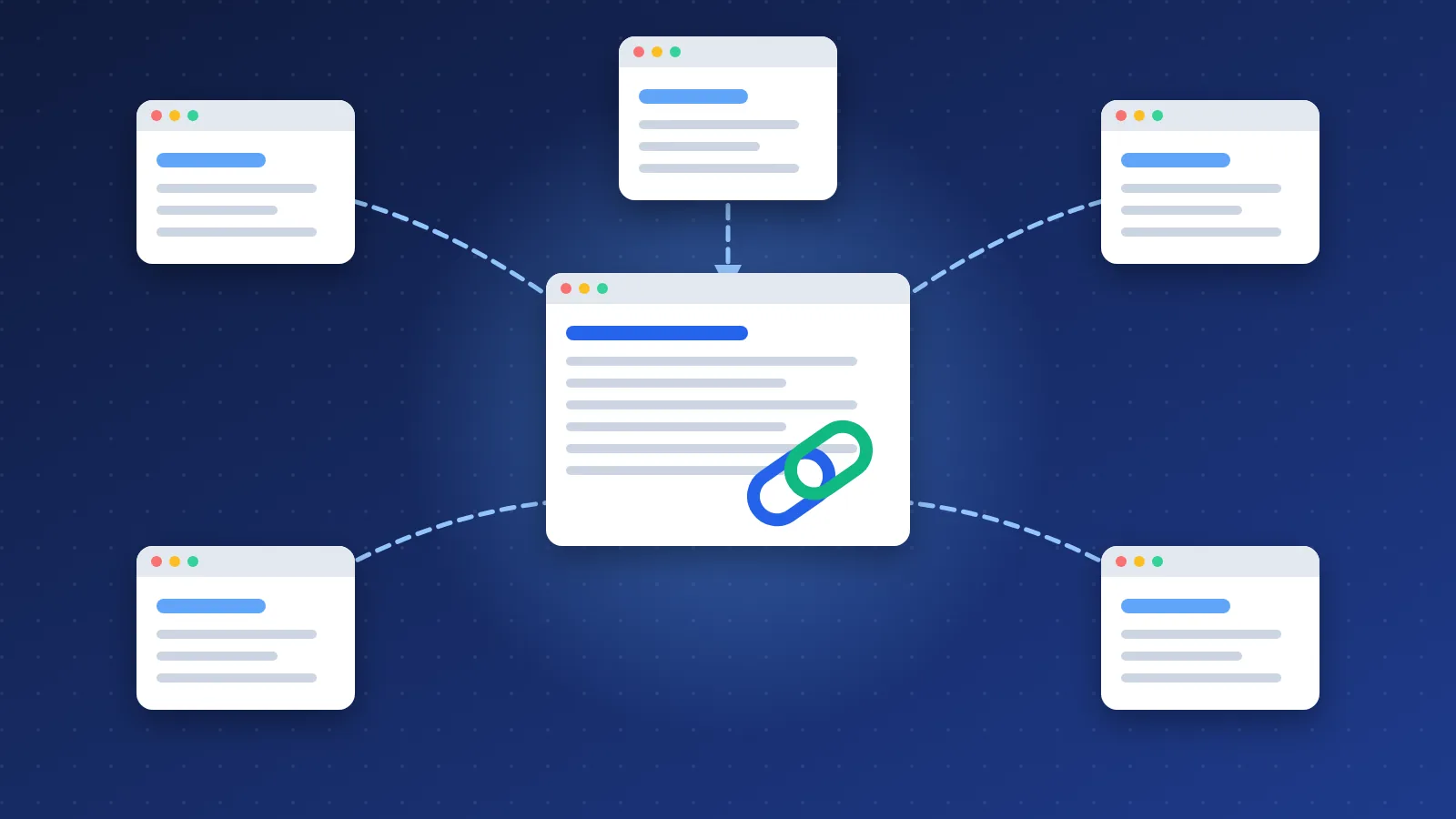
What is a web directory? It is a website that organizes links to other websites into categories, such as "Health", "Travel" or "Plumbers in Leeds", with a short description of each site. Entries are usually submitted by site owners and checked by an editor before they go live, which is the main difference from a search engine.
Directories were one of the main ways people found websites in the early web. They are much smaller today, but they still exist and still have some uses. Here is how they work, the different types, and what they can and cannot do for your SEO.
What is a web directory, in plain words?
Picture an old printed phone book, but for websites. Instead of searching every page on the internet, you browse a tree of categories and subcategories until you reach a short list of sites on one subject.
A typical directory listing has:
- the site's title (often the business or brand name),
- a link to the website,
- a short description written by the owner or the editor, and
- the category it belongs to, sometimes with extra details like an address or phone number.
A search engine works the other way around. Google sends crawlers to discover pages automatically, mostly by following links, and ranks them with software. A directory only contains what someone submitted and what an editor (or a script) accepted.
How a directory listing gets added
Most directories follow the same basic steps:
- Pick a category. You find the most specific category that fits your site.
- Submit the form. You enter your URL, title, description and sometimes an email address or reciprocal link.
- Wait for review. An editor checks that the site works, fits the category and follows the rules. On automated directories, this step is skipped.
- Go live. If accepted, the listing appears on the category page. Paid directories may charge before or after review.
Before you submit anywhere, read the rules. Our directory submission guidelines explain how to write titles and descriptions editors accept.
Human-edited vs automated directories
This is the most important difference for beginners, because it decides whether a listing is worth your time.
| Human-edited | Automated / instant approval | |
|---|---|---|
| Who approves | A person checks each site | A script accepts almost everything |
| Speed | Days to months | Minutes |
| Quality of neighbours | Usually real, working sites | Often spam, dead sites and thin pages |
| Value to visitors | Can be useful to browse | Rarely visited by real people |
| Risk | Low if the directory is relevant | Higher; large networks of these look like link schemes |
If a directory accepts anything, shows mostly ads, or has thousands of empty categories, treat it with care. Our guide on how to spot a spammy web directory lists the warning signs.
The main types of web directories
General directories
These cover every topic, from arts to science. The famous ones were DMOZ and the original Yahoo! Directory. Most general directories today are small and run by hobbyists or webmasters.
Free directories
They cost nothing to submit. Some are carefully edited, others barely moderated. Review can be slow because editors are often volunteers. Start with a checked free directory list rather than a random list copied from somewhere else.
Paid directories
You pay a one-time or yearly fee for a review or a guaranteed listing. Paying does not make a link more valuable to Google, and Google's spam policies say paid links should be marked with rel="sponsored" or rel="nofollow". A good paid directory earns its fee with real editors and real visitors. Compare options in our paid directory list.
Niche directories
These focus on one subject, such as recipes, web design or green businesses. A relevant niche listing can bring visitors who actually care about your topic.
Local business directories
These list businesses by city or region, usually with name, address and phone number (often called NAP). For a shop or service business they are still useful, because consistent business details across the web support local search. See our local business directories page.
A short history: what happened to DMOZ
DMOZ, also called the Open Directory Project, started in 1998 and was run by volunteer editors, later under AOL. For years it was the directory every webmaster wanted to be in, partly because its data was reused by other sites, including the Google Directory, which Google closed in 2011.
DMOZ closed in March 2017. Former editors carried on with a successor directory called Curlie. Its closure is often seen as the end of the era when directories were a main way to find websites.
Do web directories still help SEO?
A little, in the right cases. Here is the honest picture.
What they can still do:
- help Google discover a brand new site through a link on a crawled page,
- support local SEO through consistent business citations,
- send a few relevant visitors from a well-run niche or local directory.
What they will not do:
- push a page to the top of Google on their own,
- replace useful content and natural links,
- make mass submissions safe. Google's spam policies name excessive reciprocal linking and automated link building as link spam.
For more detail, read do free web directories still help SEO.
My experience with directories
I started Bloghints in 2006 as a web directory and checked every listing by hand, visiting each site and making sure the link worked. That was the whole idea: many lists back then were copied from other sites without anyone looking at them.
On the other side, as a site owner, I tried to get my own sites into DMOZ and was never accepted. I also submitted to reciprocal, paid and instant approval directories. The instant ones were quick, but quick rarely meant useful. Today I would only spend time on a few relevant, edited directories.
Directories mentioned in this guide
Here are directories connected to this guide. Check each one's rules and recent listings before you submit.
| Website | IP Address |
|---|---|
| No sites in this list yet. | |
Bottom line
So, what is a web directory today? A categorized list of websites, ideally checked by a real person, that can help visitors and search engines find you. Choose a few relevant, edited directories, skip the spammy ones, and keep your main effort on your own content.
Frequently asked questions
Is a web directory the same as a search engine?
No. A search engine finds pages automatically with crawlers and ranks them with software. A directory lists only the sites that were submitted and accepted, organized by category, often by human editors.
Is DMOZ still available?
DMOZ itself closed in March 2017. A group of former editors continued the project under the name Curlie, but it no longer plays the role DMOZ once had for SEO.
How many directories should I submit my site to?
There is no magic number. A handful of relevant, human-edited directories plus the main local directories for your area is plenty for most small sites. Hundreds of low-quality submissions add risk, not value.