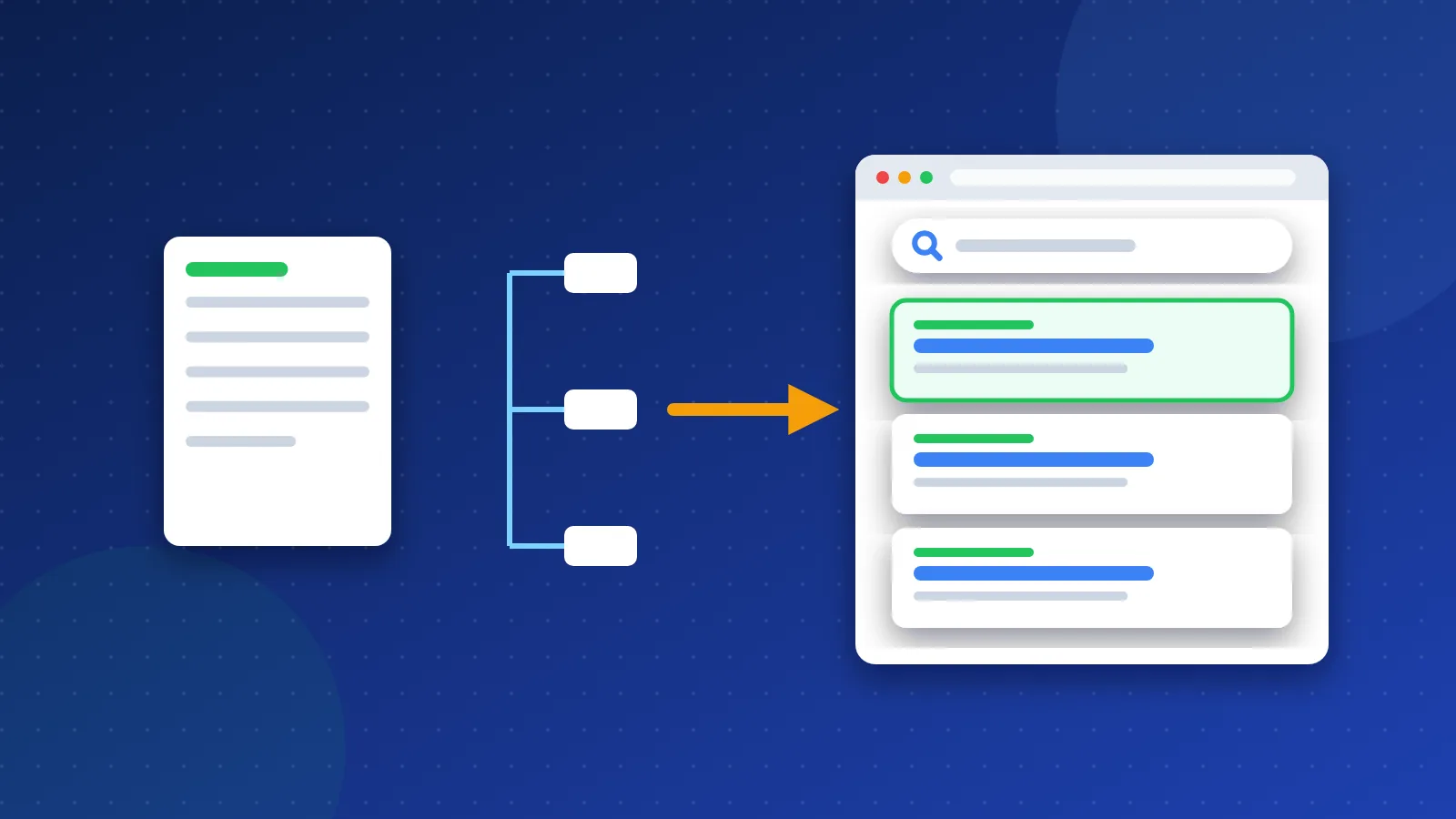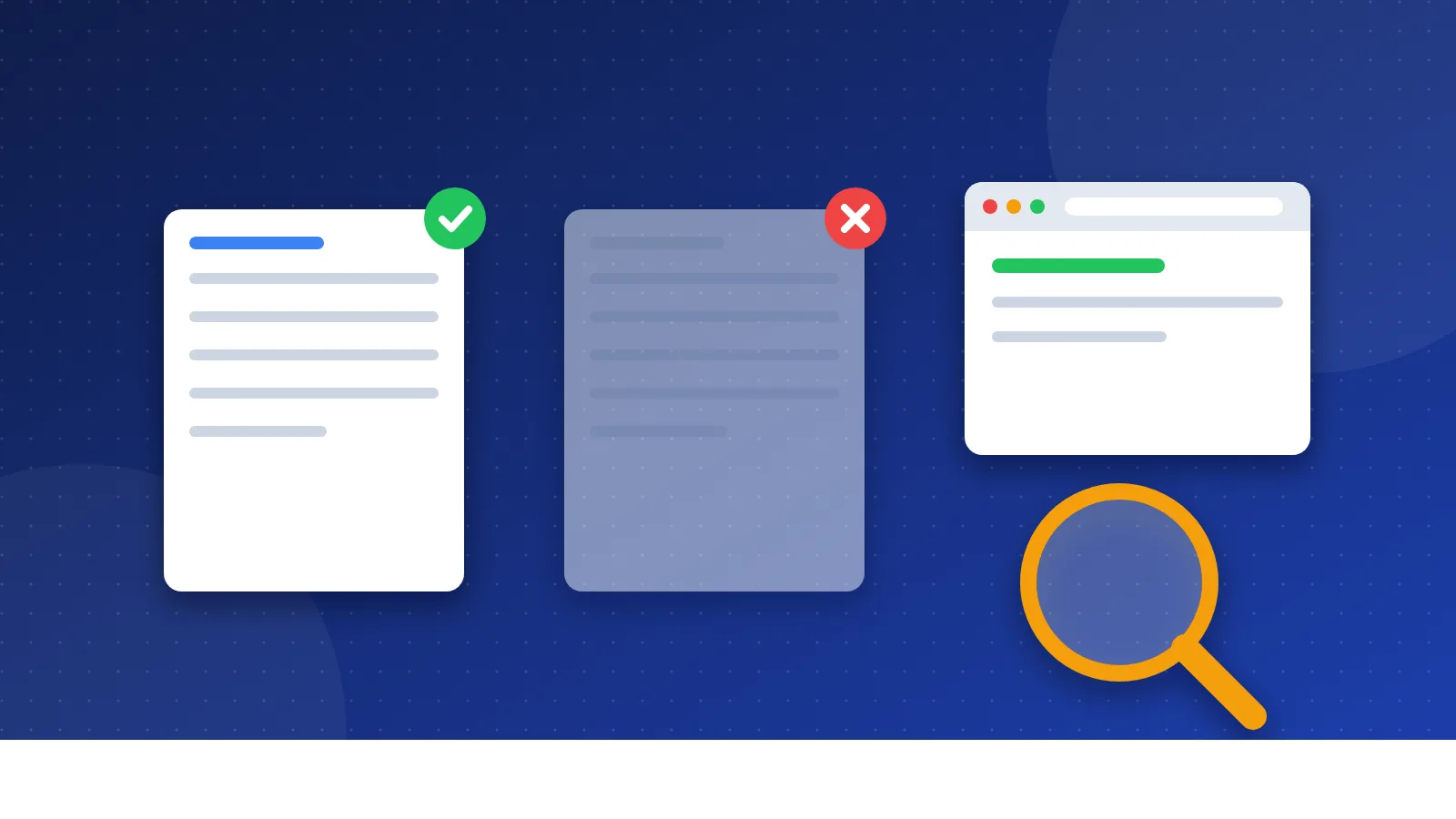
Search engine listing optimization is the work of shaping how your page looks in search results: the title link, the short text below it (the snippet), the URL path and any extras such as star ratings. A clear, honest listing earns more clicks from the same ranking position. You cannot fully control it, because Google writes the final listing, but you can feed it good material.
This article assumes your page is already in the index. If it is not, start with my guide on how to list your site in search engines first.
What makes up a search listing?
A standard Google result has four main parts. Each one comes from something on your page.
| Part | Where Google takes it from | How much you control it |
|---|---|---|
| Title link | Your title tag, main heading, og:title, link text | Strong, not total |
| Snippet | Page text, sometimes the meta description | Medium |
| URL / breadcrumb | Your URL structure, breadcrumb markup | Strong |
| Rich results | Structured data plus Google's choice | Weak to medium |
How do you write a better title link?
Google's documentation lists the sources it uses for title links. They include the <title> element, the main visible title, heading tags, the og:title meta tag, and the anchor text of links pointing to the page. In most cases your title tag wins, so write it with care.
- Describe the page. "Roof Repair Costs in Denver" beats "Home" or "Services".
- Make every title unique. Google warns against the same boilerplate title on many pages.
- Put the main topic first. Google says there is no limit on title length, but it cuts titles to fit the screen. Keep the important words at the start.
- Do not stuff keywords. Repeating the same word looks spammy to people and to Google.
- Match the H1. When your title tag and your main heading say very different things, Google may pick its own version.
How do you get a better snippet?
Many people think the meta description is the snippet. It is only one input. Google says it builds snippets mainly from the page content itself. It uses the meta description when that text describes the page better than a piece of the body.
That gives you two jobs:
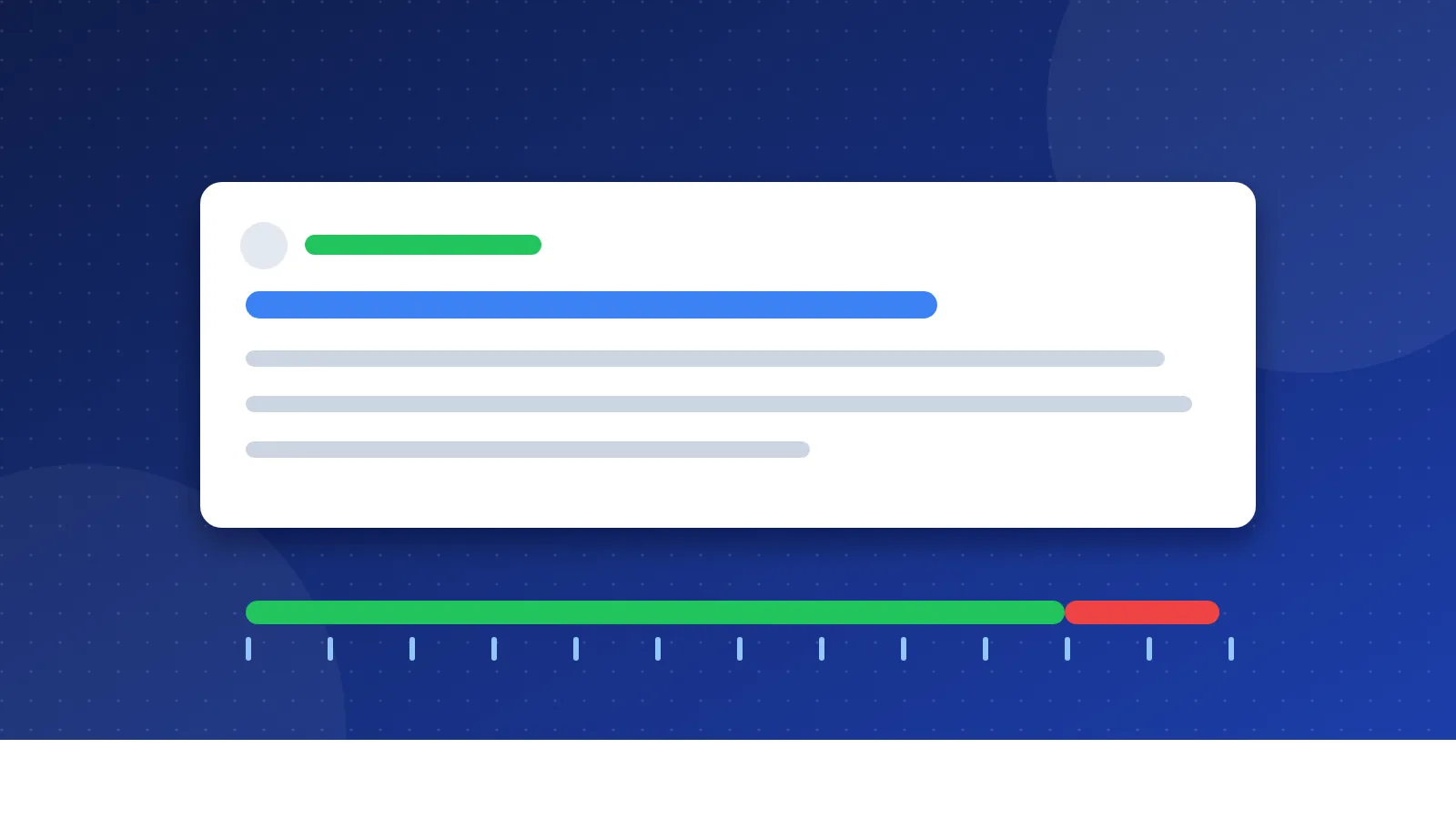
- Write a useful meta description for each important page. Summarise what the reader gets, in plain words, in one or two sentences. Google gives no fixed length and cuts snippets to fit the device, so put the key point early.
- Open the page with a direct answer. When a searcher asks a question, Google often lifts the text that answers it. A clear first paragraph helps both readers and snippets.
Want to see what your pages use today? Our guide on how to find meta tags on a website shows you how to check, and the meta tag header guide covers adding them.
You can also limit snippets. The nosnippet and max-snippet robots rules, and the data-nosnippet attribute on an HTML element, tell Google what not to show. Most sites never need them, but they help when a page holds text you do not want quoted.
Do clean URLs and breadcrumbs matter?
Yes, a little. Google shows your domain and often a breadcrumb trail above the title. A short path like /blog/roof-repair-costs reads better than /index.php?id=4821&cat=7. Breadcrumb structured data can replace the raw path with a neat trail such as "Home > Blog > Roofing". Pick your URL style before you publish. Changing URLs later means redirects and a short period of lost signals.
Can rich results make your listing stand out?
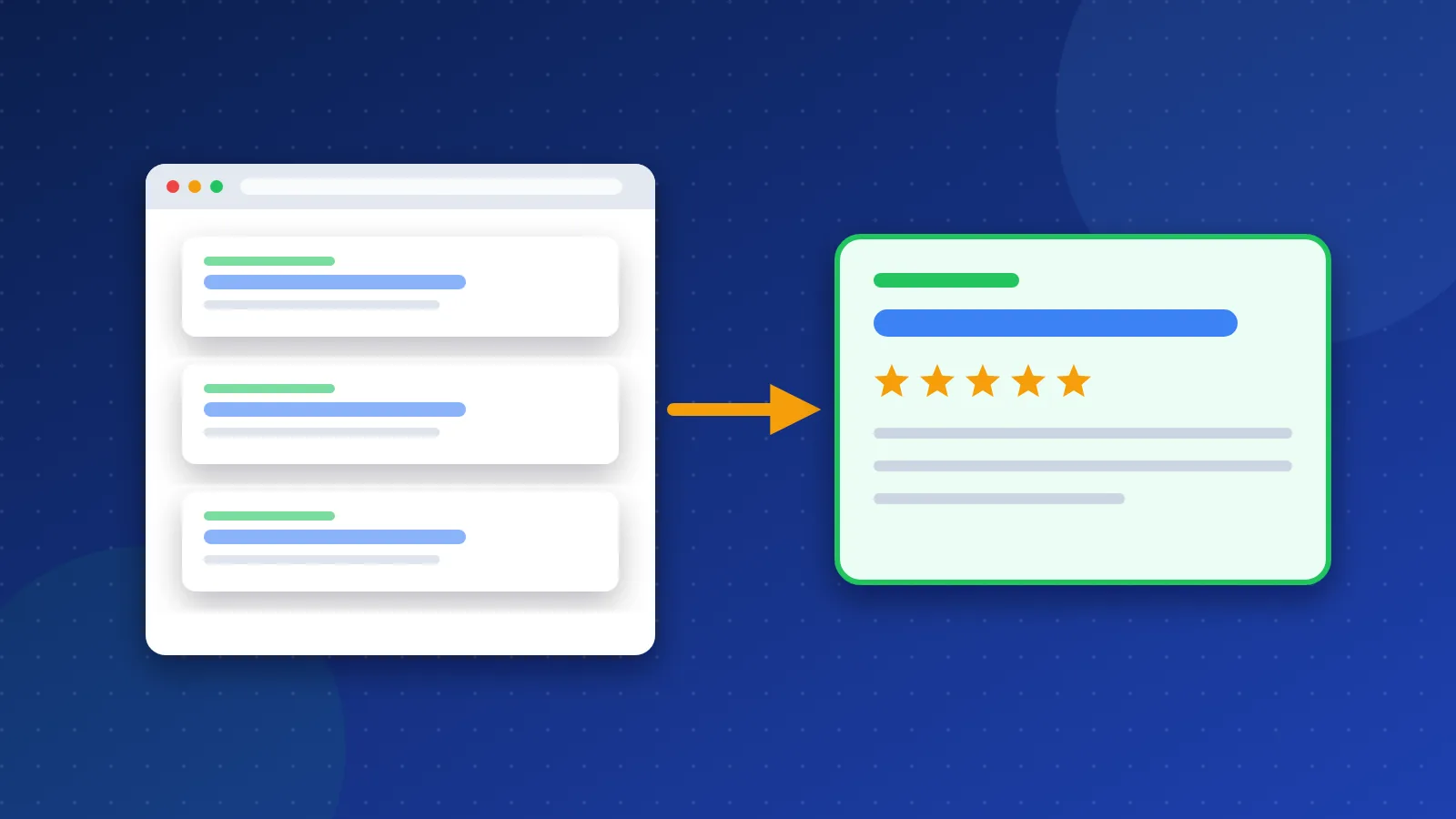
Rich results are the extras: star ratings, prices, event dates, recipe times and more. You make a page eligible by adding structured data, a small block of code that describes the page in a format Google reads. Keep three rules from Google's guidelines in mind:
- Google does not guarantee rich results, even when your markup is correct.
- Only mark up content that visitors can see on the page.
- Test your markup with the Rich Results Test before you rely on it.
Choose the types that fit your page honestly. A product page can use Product markup. A local business can use LocalBusiness. Fake reviews or hidden markup can cost you rich results across the whole site.
A simple search engine listing optimization routine
- Open the Performance report in Google Search Console.
- Sort pages by impressions. Look for pages with many impressions but a low click rate.
- Search for the main query yourself and look at your listing next to the others.
- Rewrite the title tag and meta description so they answer that query more clearly.
- Add or fix structured data if a rich result fits the page.
- Wait a few weeks, then compare the click rate for the same query.
Change one or two pages at a time. That way you can tell what helped. Search results also shift for reasons outside your control, so judge changes over weeks, not days.
What should you avoid?
- Clickbait titles. If the page does not deliver what the title promises, people bounce back to the results.
- The same meta description everywhere. Google will likely ignore it and pick page text instead.
- ALL CAPS and emoji spam. They look cheap and Google may rewrite them.
- Markup for things that are not there. Review stars without real reviews break Google's rules.
Our search engine listing guide covers the different engines if you want to check how your result looks outside Google too.
In short, search engine listing optimization is about honest packaging. Give each page a clear title, a helpful description, a tidy URL and correct structured data, and open the content with a straight answer. Google still writes the final listing, but it writes a better one when you hand it better material.
Frequently asked questions
Why did Google change my title in the results?
Google rewrites a title when it thinks another text describes the page better. Common triggers are vague titles, keyword stuffing, or a title that does not match the main heading. Make the title tag and H1 clear and consistent to reduce rewrites.
How long should a meta description be?
Google sets no fixed limit. It cuts snippets to fit the screen width. Aim for one or two clear sentences and put the most important point first, so it still makes sense when shortened.
Does a better listing improve rankings?
Not directly. A clearer listing aims to win more clicks at the position you already hold. More qualified visitors is still a real gain, even when the ranking stays the same.